
The big reveal

Clearing the lid of soil
Daylight revealed several tired-looking people, and two kilns. The kilns weren’t smoking anymore. We were so pleased to see the kilns that we patted them down around the sides in a friendly manner. This also gave us comfort that there were no hot spots. We gave the lid a good clean to make sure no soil would fall inside when we took it off; we don’t want any contaminants in our beautiful charcoal. The lifting of the lid revealed lots of lovely charcoal. The kiln was around a third full, but that first glance showed that we did achieve charcoal – result!
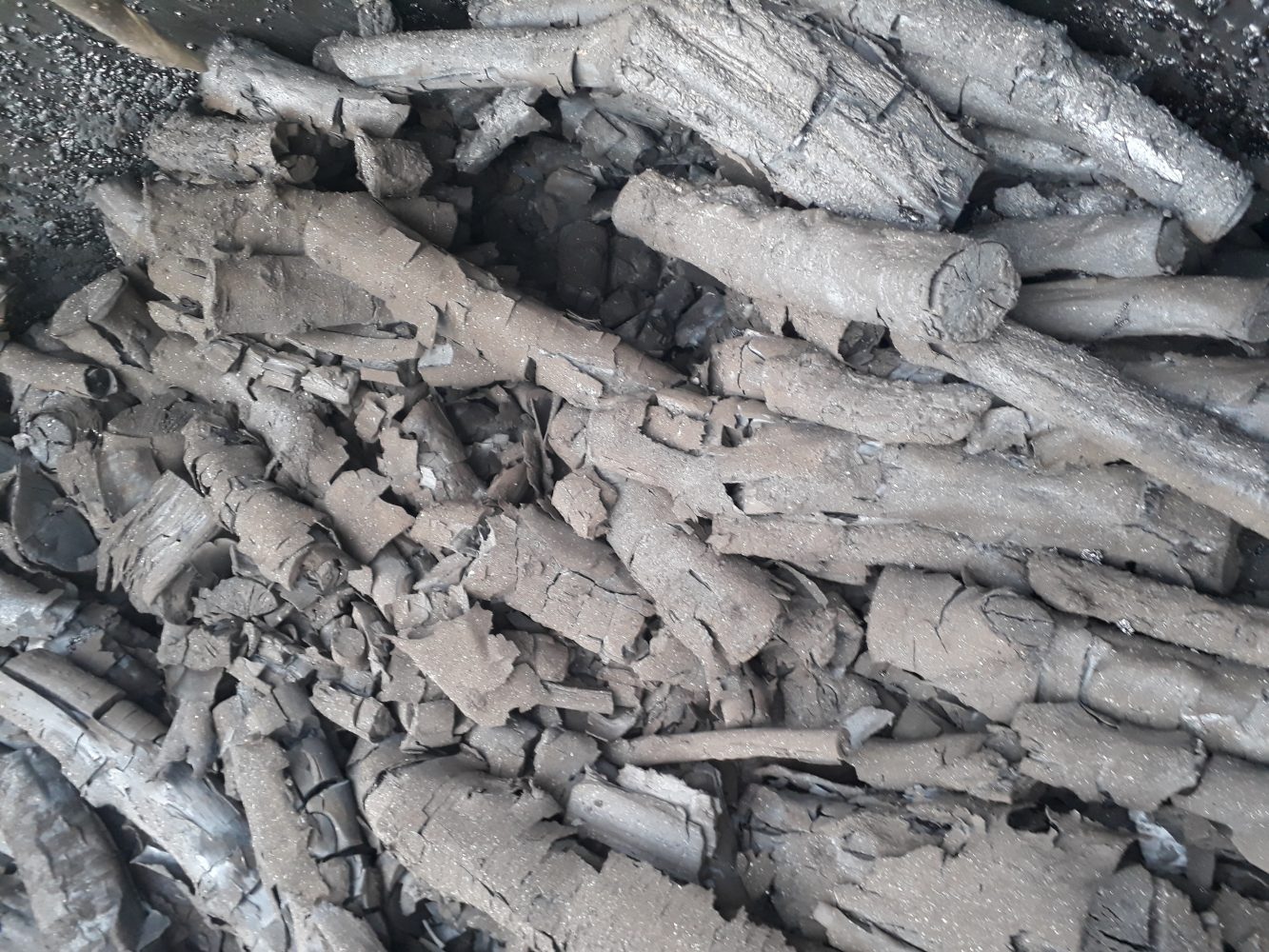
There’s a hole in the charcoal
A bit of a closer look showed that there were holes in the charcoal over the places where some of the ports were. This is maybe where the kiln burned a bit hotter at one side, or at one time.

Brown end or par char
We couldn’t see much “par char” or “brown ends” on the top, and this wasn’t just because we hadn’t yet learnt to recognise it. The par char is more likely to be found in patches – nearer the kiln sides and the bottom. We got a bit more instruction in this art; it’s likely to look a bit browner that the rest, maybe just at one end… and if you’re not sure bang it on the side of the kiln. After unloading a couple of kilns we were all much more expert at spotting it.
The mini reveal

Mini kiln reveal
We went through the same process with the mini kiln, and we were equally excited to find charcoal inside. We couldn’t see much par char, but we did see some ash. This probably happened when we saw the blue smoke coming from the kiln yesterday – the charcoal was burning. I know the charcoal doesn’t look very impressive in the picture; the charcoal only reaches to about a quarter of the way up the kiln, but we were PLEASED. We used really wet wood to fill this yesterday, and there was more than a small chance that the whole kiln would be filled with par char. Another result!
Hand-picked artisan charcoal
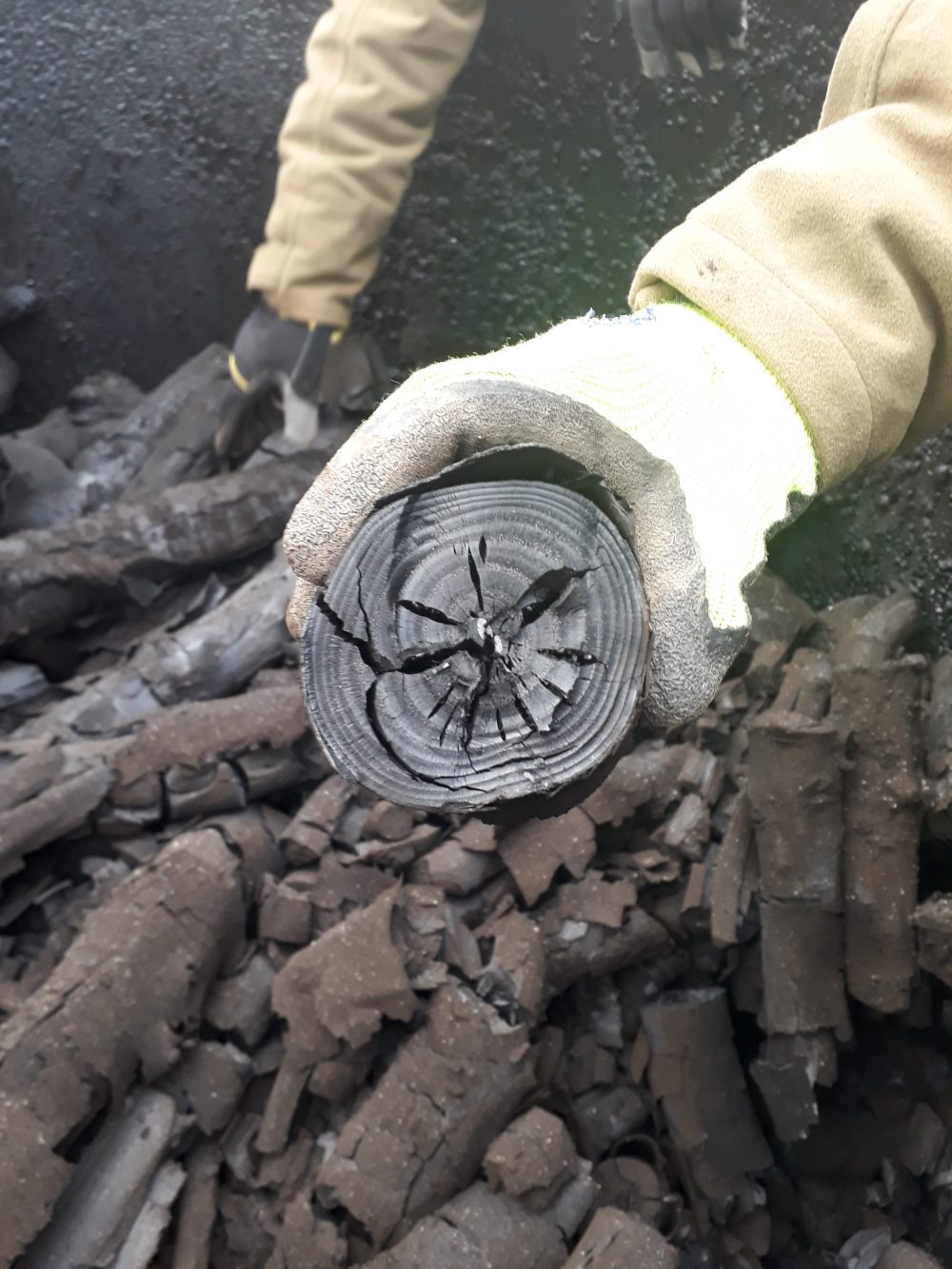
Piece of charcoal
Now we all leaned over the edge of the big kiln; we tried not to fall in while we picked out pieces to put in our smart brown bags to take home. Ideally these smart brown bags would stay smart. But once we put the bags on the floor to fill, and we handled them with grubby, dusty gloves, the bags started to look less beautiful. By the time I’d spent five minutes trying to double fold the top (that was actually the bottom – the bags get filled upside down), my bag was looking very sorry. Maurice took it from me and folded it much more professionally.
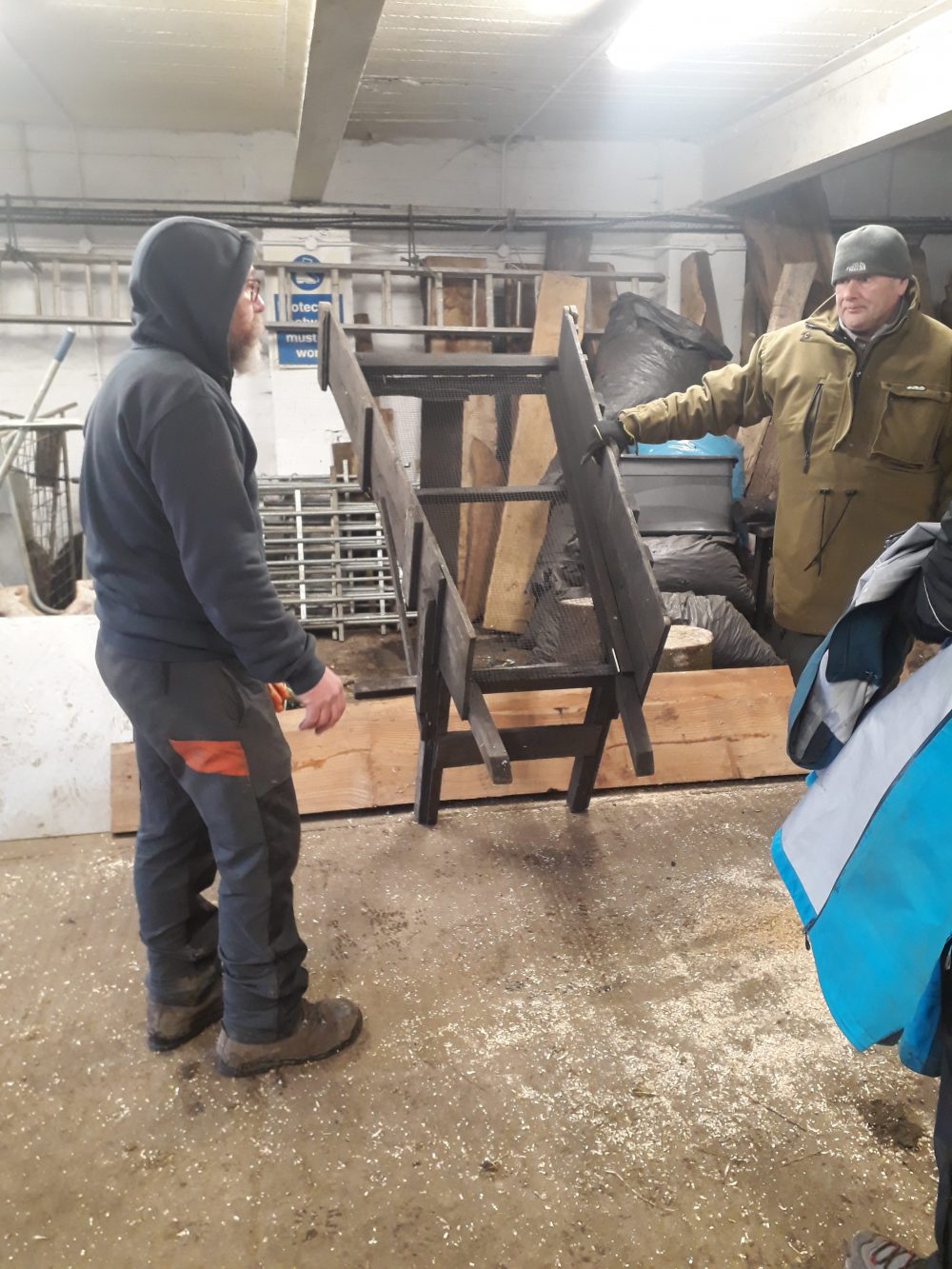
Low tech grader
For best results the charcoal is often taken out of the woods to grade and bag. A floor that is mud-free, and hands that are glove-free lead to more pristine looking sacks. With the aid of a grader, a team of two can fill and seal 60 bags an hour. We didn’t practise this today – one bag each was enough to keep us happy.
Does anyone have overalls?
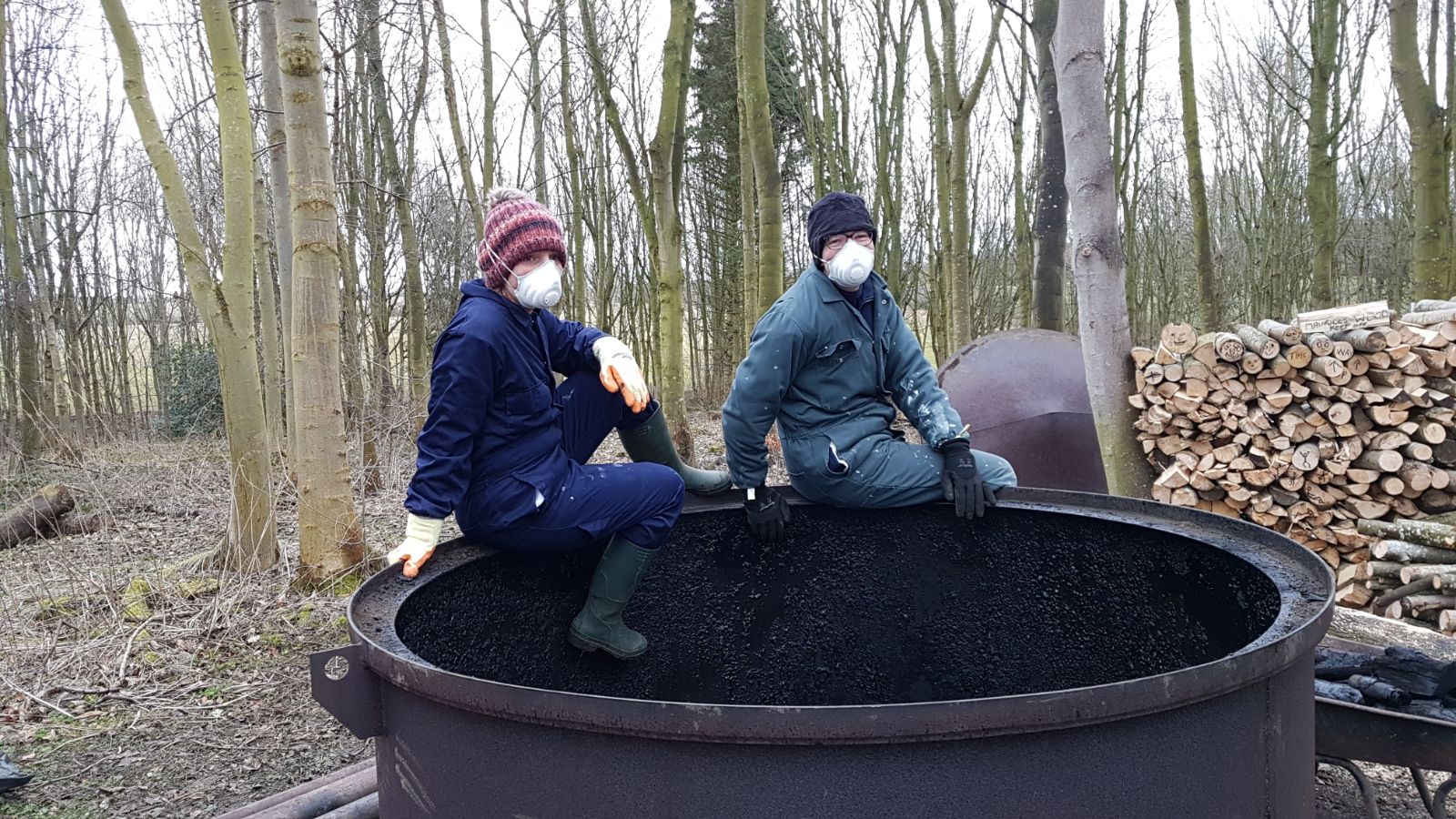
On our way in
There was a point yesterday when Maurice asked if any of us had overalls. Caroline and I were fool enough to admit to owning a pair each. In retrospect, I should have owned up to having more than one pair – it’s important to share out these experiences. Once protected with overalls and a mask, we leaned in and used asphalt shovels to clear a place inside the kiln to stand. These shovels are slightly scooped, and the tines are spaced at just under an inch. They can lift a fair bit of charcoal, and with a bit of a shake, they do some grading on the way. Then we jumped in, and shovelled out the rest of the charcoal.

Kiln almost empty
It was hot work; inside the kiln it was sheltered from the breeze, and I was wearing my overalls over all my other clothes. I’m sure I got a bit better at spotting brown ends; it’s important to sort these out of the charcoal. But because of the mask, my glasses steamed up with condensation. My eyes filled with dust too. I ended up doing without the glasses and working blind. Maybe there were some charcoaled hedgehogs in the bottom of the kiln – I’d never have known.
Re-fill the kiln
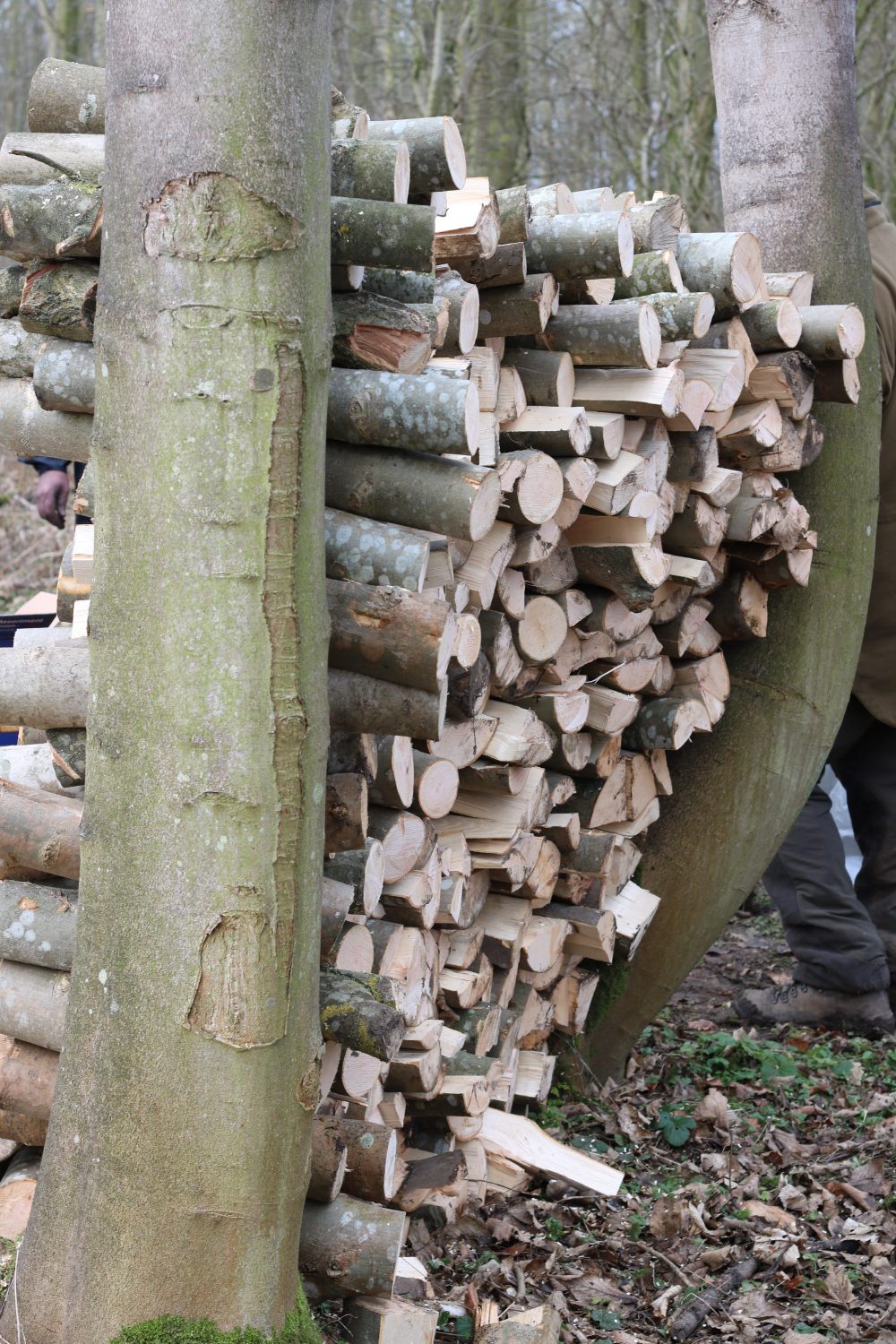
Wonky log pile
And the last task was to re-fill the kiln ready for the next burn. We’d built a fabulous pile of wood yesterday – carefully positioned between two convenient trees, and lovingly grafitti’d with charcoal art. Now it was time to transfer this wood into the kiln… Caroline stepped up to The Crystal Maze challenge; back into the kiln for her.

The plan…
When filling the kiln, it’s really important to get the bottom layer right. The bottom of the kiln is where the ignition source is introduced; a good clear route from the lighting port to the centre is really important. Any fire needs oxygen and fuel. The oxygen is taken care of with good ventilation routes from each port to the centre. The fuel is made from using layers of par char at the middle, and up a central chimney.

Bottom layer positioned
Maurice suggested that aiming for something that looked like the radiation symbol would be a good plan, with each of the six ports positioned at the centre of each segment. Caroline complied. She laid the next layer with similar care, and then we worked together to transfer the rest of the woodpile into the kiln. Skinny pieces went towards the edges, chunkier pieces towards the middle, and every gap filled.
Thoughts about weight
At the beginning of the day, Maurice made a comment that “charcoal can lose weight”. I cleverly jotted this down, but didn’t remember the point behind it – I was tired! I think it was something to do with weighing bags of charcoal… and them getting lighter? But actually, weight was much on our minds today…
We emptied the kiln first – shifting probably about 150kg of charcoal into bags. Then, after a short break we filled the kiln – shifting and positioning around a 1000kg of green wood. During the burn, the weight of the contents of the kiln drops by around 850kg. As we all know, mass doesn’t just disappear, so what actually happens in the burn is that 850kg of mass literally goes up in smoke. I know the smoke was pretty thick yesterday, but I just can’t get my head around smoke weighing that much.

Recent Comments